China Best Carabiner Keychain Manufacturers for Global Buyers
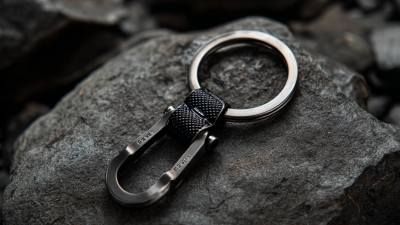
Choosing among China’s best carabiner keychain manufacturers requires more than comparing catalog prices. Global buyers need dependable construction, consistent finishing, and clear communication throughout production. A quality Carabiner Keychain should open smoothly, close securely, and resist everyday abrasion. Materials may include aluminum alloy, stainless steel, or zinc alloy, depending on the intended use. Each option affects weight, appearance, corrosion resistance, and cost.
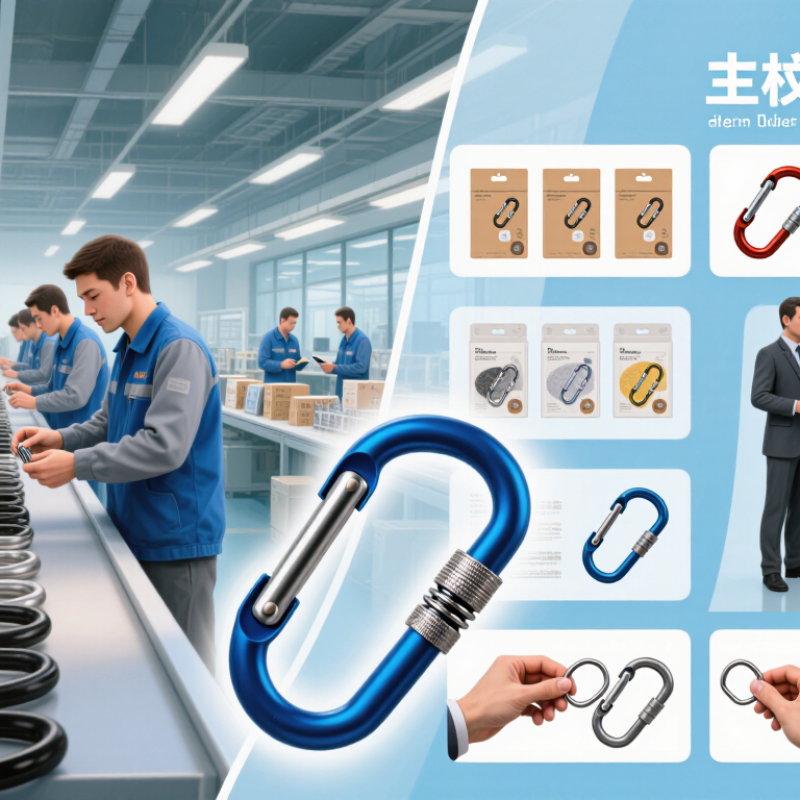
Experienced sourcing teams usually review factory capabilities before placing large orders. They request material specifications, production samples, packaging details, and inspection records. They may also examine anodizing quality, spring performance, logo accuracy, and edge smoothness. These small checks often reveal larger manufacturing problems. Supplier audits can provide useful evidence, but one successful sample does not guarantee every shipment. That deserves attention.
The phrase “best manufacturer” can be misleading. The right factory depends on order volume, customization needs, target markets, and required testing. A promotional buyer may value color flexibility and fast sampling. An outdoor brand may prioritize durability and documented quality control. Responsible manufacturers should communicate realistic production limits and support applicable product-safety requirements. They should not promise impossible delivery dates.
This guide introduces practical criteria for evaluating Chinese suppliers. It considers factory experience, material control, customization, quality assurance, communication, and export support. Buyers should compare evidence, not only polished websites. Ask precise questions. Check the details. A reliable partnership develops through transparent expectations, repeatable inspections, and honest improvement when something falls short.
Carabiner Keychain Basics: Materials, Sizes, Uses, and Load Ratings
Carabiner keychains are small utility accessories, but their materials strongly affect weight, appearance, and service life. Aluminum feels light and resists everyday corrosion, making it suitable for keys, clips, and lightweight gear. Stainless steel offers better wear resistance and performs well in humid environments. Zinc alloy can provide attractive shapes and finishes, although its strength may vary between designs. I have found that thick-looking metal does not always mean higher performance.
Common sizes range from about 40 to 80 millimeters. Smaller models fit pockets and key rings, while larger models attach easily to backpacks, tool pouches, or outdoor accessories. Gate shape also matters. A spring gate should open smoothly and close completely without catching. Some users prefer screw-lock designs for added retention, but these require more handling. A small detail.
Load ratings need careful interpretation. Check whether the rating applies along the main spine, across the gate, or to the complete assembly. These positions can produce very different results. Many keychain carabiners are designed for carrying items, not for climbing, lifting people, or other life-safety applications. Reliable suppliers should provide material details, dimensional drawings, inspection records, and batch testing evidence. A printed number alone is not enough. Buyers should also examine gate cycles, surface treatment, sharp edges, and ring attachment strength. Specifications sometimes look complete, yet one missing test can change the purchasing decision.
Carabiner Keychain Basics: Materials, Sizes, Uses, and Load Ratings
Approximate density of common materials used in carabiner keychains
Aluminum is lightweight and commonly selected for compact everyday keychain accessories. Zinc alloy is denser and is often used for die-cast decorative designs, while stainless steel provides higher density and strong corrosion resistance. Approximate densities are 2.70 g/cm³ for aluminum, 6.6 g/cm³ for zinc alloy, and 7.9 g/cm³ for stainless steel; exact values vary by alloy and manufacturing process.
Keychain carabiners are generally intended for attaching keys and light accessories, not for climbing, fall protection, lifting, or other life-safety applications. A load rating should only be relied on when it is clearly specified and tested for the particular product; there is no universal load rating for all carabiner keychains.
Safety Standards: EN 12275, UIAA 121, and Non-Climbing Product Limits
Global buyers comparing China-based carabiner keychain manufacturers should separate climbing connectors from everyday accessories.
EN 12275 and UIAA 121 concern connectors intended for climbing systems, not automatically every keychain. Similar shapes can hide major differences in strength, traceability, and manufacturing control. Appearance proves little. An experienced purchasing review starts with the declared application.
Ask for the exact standard edition, test scope, product identification, batch records, and independent laboratory evidence.
Check gate function, major-axis strength, corrosion performance, and marking durability against the stated connector category. Requirements may vary by connector type.
Question the claim. A reliable manufacturer should explain sample selection, testing conditions, and limits without vague language. Do not accept “UIAA tested” without a report number matching the supplied model.
Non-climbing keychain carabiners have a narrower role: holding keys, tags, or light accessories.
They are not protective equipment.
Packaging should warn against climbing, lifting, fall protection, and human support. Twisting, impact, or side loading may open the gate. Finish proves nothing.
Before volume orders, importers should review instructions, material declarations, inspection plans, and corrective-action records.
My review process is not flawless; supplier files can be incomplete or poorly translated. I once trusted a neat catalog too quickly. That was a useful mistake. Rechecking samples under realistic handling is wiser than trusting photographs.
Quality Verification: ISO 9227 Corrosion Tests, Coating Thickness, and Inspection
China Best Carabiner Keychain Manufacturers for Global Buyers
Quality verification should begin with evidence, not attractive samples. Reliable carabiner keychain manufacturers can provide ISO 9227 neutral salt spray test records for the finished product. Inspectors should confirm the test duration, chamber conditions, sample quantity, and visible corrosion results. A small steel carabiner may look flawless after packaging, yet hidden corrosion can appear around the gate, hinge, or engraved area.
Coating thickness also requires measurement. Use a calibrated thickness gauge on several points, including edges and recessed surfaces. Record the average and the lowest reading. Uneven coating often signals rushed preparation or poor process control. Supplier inspection should include dimensions, spring action, gate alignment, surface scratches, and plating adhesion. A practical check is repeated opening and closing, followed by visual inspection under bright light. It is simple, but useful. Test records alone are not enough.
Tips: Request third-party reports when possible. Compare report dates with the current production batch. Ask for raw measurements, not only pass-or-fail statements. Keep retained samples for later comparison. Inspectors should photograph test areas before and after salt spray exposure. One weakness remains: ISO 9227 results do not perfectly predict outdoor service life. Humidity, abrasion, and skin contact can change performance. Treat laboratory data as strong evidence, not a guarantee.
Global Buying Guide: OEM Design, Certifications, Pricing, and Export Compliance
China Best Carabiner Keychain Manufacturers for Global Buyers
A reliable OEM project starts with the end use, not a catalog photo. Specify alloy grade, gate spring life, plating thickness, logo depth, dimensions, and packaging. A keychain carabiner is usually an accessory, not climbing equipment. Do not market it for load-bearing use unless the design and testing support that claim. Ask for evidence. ISO’s 2023 Survey recorded more than 1.2 million ISO 9001 certificates worldwide, but certification alone cannot prove factory consistency.
Request material declarations, batch inspection records, and corrosion-test results. For European shipments, check REACH and applicable product-safety requirements. For the United States, review relevant consumer-product rules before approving artwork or packaging. Export classification, commercial invoices, country-of-origin marking, and carton data should match the actual product. Small details matter. One overlooked coating chemical can delay clearance or force repacking.
Pricing should separate tooling, sampling, unit cost, packaging, testing, and freight. World Bank commodity reports show that industrial metal prices can shift noticeably across procurement cycles, so fixed quotes need a clear validity period. Compare at least three factories using the same specification sheet. The cheapest offer may use thinner metal or weaker springs. That is where buyers often misjudge value. A pre-shipment inspection is useful, although it cannot replace process control. I would also keep a retained sample from every approved production batch; this simple step is easy to skip, and regrettable when disputes arise.