Get Instant Quote
Leave Your Message

10 Tips for Buying Anime Key Straps Wholesale

Anime Key Straps have moved beyond niche fan items. They now sit within a wider, fast-growing anime merchandise economy. The Association of Japanese Animations reported that Japan’s anime industry market reached approximately ¥3.3465 trillion in 2023. That figure includes overseas business, licensing, streaming, and merchandise. It does not measure key straps separately. That limitation matters.

For wholesalers, demand alone is not enough. Buyers must inspect material quality, artwork accuracy, packaging, pricing, and supplier reliability. A bright acrylic charm may look attractive online, yet arrive with cloudy edges or weak metal rings. Small defects become expensive when ordered by the carton. Industry research from Licensing International also shows the scale of licensed merchandise worldwide, reinforcing the value of authentic character products and documented permissions. However, broad licensing data cannot replace product-level checks.

This guide presents 10 practical tips for buying Anime Key Straps wholesale. It focuses on supplier experience, sample approval, minimum order quantities, production timelines, and quality-control records. It also considers trademark authorization, copyright documentation, and region-specific selling requirements. Ask for evidence, not promises.

Good products need proof.

Wholesale buyers should compare more than unit prices. A cheaper strap may carry higher defect rates, slower replenishment, or unclear licensing status. Reviewing supplier samples under store lighting can reveal scratches, color shifts, and loose clasps. The strongest purchasing decision combines market evidence with direct inspection. Some recommendations may need adjustment for your country, sales channel, and customer profile. That is normal. Careful buyers leave room to revise assumptions before placing a large order.

10 Tips for Buying Anime Key Straps Wholesale

Understanding Anime Key Strap Types and Wholesale Market Categories

10 Tips for Buying Anime Key Straps Wholesale

Understanding Anime Key Strap Types and Wholesale Market Categories

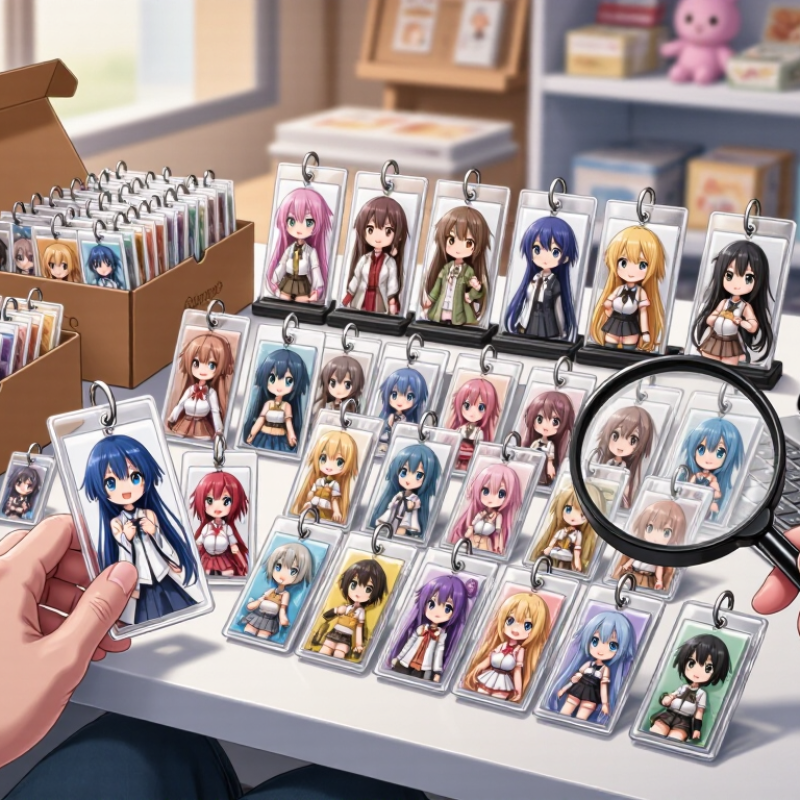
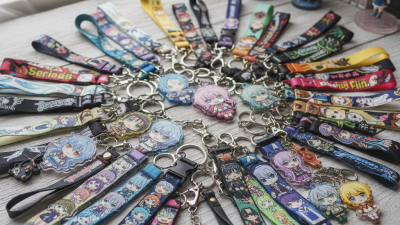
Anime key straps fall into clear wholesale categories: acrylic, PVC or rubber, metal, plush, and fabric. Acrylic styles are lightweight and display sharp printed details. PVC straps resist moisture and suit bags used outdoors. Metal versions feel premium but add weight and shipping costs. Plush designs attract gift buyers, though they need stronger stitching and protective packaging. Choose by material, audience, and selling environment.

The Association of Japanese Animations reported a record Japanese anime market value of ¥3.3465 trillion in 2023. Grand View Research also estimated the global anime market at USD 31.23 billion in 2023, with strong projected growth through 2030. These figures support demand, but they do not guarantee fast sales for every design. That distinction matters.

Wholesale markets also differ by order quantity. Small-batch suppliers suit testing, while factory-direct orders may offer lower prices and custom packaging. Ask for material specifications, clasp strength, print durability, and sample photos under normal lighting. I have found that a cheap sample can hide weak rings or uneven edges. My earlier mistake was judging only the unit price. Check minimum order quantities, production times, carton dimensions, and documented licensing authorization before payment. Seasonal designs may sell quickly, but leftover stock can become difficult to move.

Defining Your Budget, Quantity Needs, and Target Customer Profile

10 Tips for Buying Anime Key Straps Wholesale

Your budget should begin with a landed-cost worksheet, not a supplier quote. Include unit price, sampling, packaging, shipping, taxes, storage, and a small defect allowance. Grand View Research valued the global anime market at $28.61 billion in 2022 and projected a 9.8% CAGR through 2030. That growth supports demand, but it does not guarantee quick sales. My early estimates were too optimistic.

Set quantity from your target customer profile. A convention shopper may prefer colorful, low-cost straps, while collectors may accept fewer pieces with stronger materials and detailed finishing. Licensing International’s 2024 Global Licensing Industry Study reported $356.5 billion in licensed merchandise and services sales during 2023. This figure shows the power of character-driven products, but your local audience may behave differently. Ask five practical questions: Who buys, what age are they, which designs attract them, where do they shop, and what price feels reasonable?

Test before scaling. Order samples in several styles, then show them to real customers or online followers. Track clicks, comments, and purchase questions. A starting order of 50 to 100 pieces can limit exposure, although it may raise the unit cost. Do not confuse a low quote with good value. Check clasp strength, print clarity, metal edges, packaging, and replenishment time. Mistakes happen. Leave cash for slower designs, because demand forecasts are rarely perfect.

10 Tips for Buying Anime Key Straps Wholesale - Defining Your Budget, Quantity Needs, and Target Customer Profile
No. Planning Dimension Practical Wholesale Benchmark Recommended Buying Action Key Check Before Ordering
1 Set the Total Budget Allocate a product budget separately from freight, import duties, packaging, and marketplace fees. Create a landed-cost worksheet before comparing suppliers. Use the total delivered cost rather than the factory price alone. Leave a contingency of approximately 10% for freight changes, defects, samples, or customs-related costs.
2 Define the First-Order Quantity A test order commonly ranges from 50 to 300 pieces per design, depending on the supplier’s minimum order quantity. Start with a controlled assortment instead of committing to a large volume across many untested designs. Confirm whether the minimum order quantity applies per design, per color, or to the complete order.
3 Profile the Target Customer Typical customer groups include convention visitors, collectors, gift shoppers, students, and online fandom communities. Match size, price, artwork style, and packaging to the spending habits and interests of one primary customer segment. Avoid selecting products only because they appeal to the buyer; validate demand with surveys, pre-orders, or sales history.
4 Choose the Product Format Common formats include acrylic charms, rubber charms, metal tags, fabric straps, and layered or double-sided designs. Use acrylic or rubber formats for lightweight everyday merchandise, and consider metal or layered options for premium collections. Compare durability, scratch resistance, attachment strength, print clarity, and perceived value for the intended price point.
5 Compare Unit Cost and Landed Cost A lower unit price may be offset by tooling, sample charges, packaging, shipping, taxes, or quality-control costs. Calculate: product cost + setup cost allocation + packaging + freight + duties and taxes + inspection cost. Request a written quotation that lists one-time fees and recurring costs separately.
6 Evaluate Material and Hardware Important specifications include material thickness, coating, clasp type, ring size, print method, and corrosion resistance. Ask for a specification sheet and a physical sample before approving mass production. Check that the clasp opens smoothly, the ring is securely attached, and printed areas are aligned and free from visible defects.
7 Review Artwork and Usage Rights Original artwork and properly licensed artwork reduce the risk of takedowns, rejected shipments, or inventory loss. Use original designs, public-domain material where appropriate, or documented commercial licenses for character-based products. Keep written records of ownership, permissions, approved files, and any limits on geography or sales channels.
8 Check Quality-Control Standards A useful inspection plan defines acceptable limits for scratches, bubbles, color variation, misprints, missing parts, and packaging damage. Approve a production sample and provide a photo-based defect checklist before manufacturing begins. Specify the inspection timing, replacement policy, refund terms, and evidence required for defective goods.
9 Plan Packaging and Retail Presentation Individual bags, backing cards, header cards, and barcode labels can improve display efficiency and order fulfillment. Select packaging based on the sales channel: compact packaging for shipping and more visible presentation for event booths or retail displays. Confirm packaging dimensions, recycled-content claims, labeling requirements, and whether packaging is included in the quoted price.
10 Manage Reordering and Inventory Reorder timing should account for production lead time, transit time, customs clearance, and seasonal demand. Track sales by design and set a reorder point before popular items reach zero stock. Keep slow-moving designs in smaller batches. Review sell-through rate, return rate, defect rate, and profit per design before expanding the next order.

Evaluating Suppliers, Product Quality, and Anime Licensing Compliance

Buying anime key straps wholesale requires more than comparing unit prices. I start by checking supplier experience, factory details, and communication speed. A reliable supplier should provide clear product specifications, sample photos, and realistic production schedules. Ask whether the supplier manufactures goods directly or uses another workshop. That answer can affect quality control and delivery risks.

Request physical samples before placing a large order. Inspect the metal clasp, ring strength, printing edges, color consistency, and surface scratches. Test the strap repeatedly, not just once. One sample may look excellent. A larger batch can still show uneven plating or loose attachments. I once trusted approved photos too much, and the delivered colors were slightly duller. That mistake changed my inspection process.

Licensing compliance needs written evidence. Ask for authorization covering the character artwork, product category, sales territory, and agreement period. A supplier’s verbal assurance is not enough. Check approval records, invoices, and artwork files when available. Make sure the licensed design matches the final product, including small printed details. Different countries may apply different intellectual property rules, so consult a qualified local professional when uncertainty remains. Keep contracts, inspection reports, and correspondence in one folder. It sounds simple. It prevents confusion later. Sampling, documentation, and careful supplier questions create a safer wholesale decision, although no checklist removes every risk.

Comparing Prices, Minimum Orders, Shipping Terms, and Customization Options

Anime key straps look inexpensive, but wholesale value depends on landed cost, not the unit quote.

Grand View Research estimates the global keychain market could grow at about 5% annually through 2030. That market is broader than anime accessories, so use the figure as direction, not proof. Licensing International reported $356.5 billion in global licensed merchandise sales during 2023, including $149.8 billion from entertainment and character products. Demand exists.

Request three comparable quotations with identical materials, size, plating, packaging, and order quantity. A $0.48 strap may become $0.73 after mold fees, packaging, inspection, and freight. Check price breaks at 100, 500, and 1,000 pieces. Minimum orders matter. A low unit price may hide a costly first run. Ask whether the minimum applies per design, color, or total order.

Shipping terms require careful reading. Compare EXW, FOB, and DDP quotes, then verify carton dimensions, gross weight, transit time, insurance, and customs responsibilities. ICC Incoterms 2020 can clarify these obligations. I would request a production sample before approving bulk work. Small defects show quickly on glossy acrylic: cloudy edges, loose rings, or mismatched colors. Customization should include artwork proofing, finish options, backing cards, barcode labels, and revision limits. One missed detail can erase the saving. Keep written approval records, although suppliers may still interpret color differently.

Inspecting Samples and Building a Reliable Wholesale Purchase Plan

10 Tips for Buying Anime Key Straps Wholesale

Inspecting samples should guide every wholesale decision. The Association of Japanese Animations reported a 2022 anime industry market of 3.3465 trillion yen. Overseas demand reached 1.4592 trillion yen, showing strong international potential. However, demand does not excuse weak product checks.

Tip 1: Order several samples from different production batches.

Check print sharpness, strap stitching, metal edges, clasp movement, and odor. Rub the surface lightly with a white cloth. Color transfer can reveal poor finishing. Measure each piece against the supplier’s specification sheet. A one-millimeter difference may affect packaging and display fit. Take dated photos. Keep them with written inspection notes.

Tip 2: Build a small testing plan before negotiating volume.

Request material details, carton dimensions, defect allowances, lead times, and replacement terms. Confirm whether samples match the final production version. They sometimes do not. The China Chamber of Commerce for Import and Export of Light Industrial Products and Arts-Crafts reports that quality consistency remains important in export-oriented manufacturing. That makes batch approval more useful than trusting one attractive sample.

Tip 3: Use a staged purchasing schedule.

Start with a limited order, review sell-through, then increase quantities. Track landed cost, damaged units, packaging waste, and customer complaints. Leave room for seasonal demand changes. I once underestimated packaging space; freight costs erased the expected margin. A reliable plan should include a cash buffer, inspection checkpoint, and backup production date. Perfect forecasts are unrealistic. Clear records are not.