China Top 10 Carabiner Keychain Suppliers?
China’s carabiner manufacturing sector combines high-volume production with flexible customization. That makes supplier selection attractive, but not automatically safe or reliable. A polished catalog can still hide weak spring action, rough gate movement, or inconsistent plating. This guide introduces ten notable Chinese suppliers of Carabiner Keychain products, focusing on practical buying evidence rather than attractive photographs.
Outdoor equipment writer John Long offers a useful reminder: “Good gear supports judgment; it never replaces it.” His principle applies here. A promotional keychain carabiner is not the same as certified climbing equipment. Buyers should confirm its intended use, alloy, surface finish, gate design, dimensions, weight, and tested load information. These details matter when a product carries keys, tools, or small accessories every day.
The comparison considers factory experience, sampling speed, customization ability, quality controls, export history, and communication. It also examines whether suppliers provide clear material declarations, inspection records, and consistent packaging. Certifications can strengthen confidence, although certificates alone do not prove every batch is perfect. A sample may feel smooth in the hand, while a later production run differs slightly. That possibility deserves attention.
The final selection should match the buyer’s market, budget, order volume, and risk tolerance. Some suppliers may excel at zinc-alloy promotional designs. Others may perform better with lightweight aluminum or stainless-steel models. No ranking remains permanent. Manufacturing quality changes, and supplier claims require verification. Request samples, inspect the gate, compare measurements, and document every agreed specification before placing a larger order.
What Are Carabiner Keychains and How Are They Used?
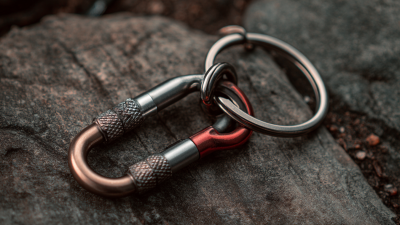
Carabiner keychains are compact accessories with a spring-loaded gate, metal body, and key ring. They attach keys to belt loops, backpacks, tool bags, or zipper pulls. The gate opens with thumb pressure, then closes around a fabric loop or metal ring. It is practical, but often misunderstood. Most keychain carabiners are not climbing equipment. Their strength, gate design, and material vary widely.
The Outdoor Industry Association’s 2024 Outdoor Participation Trends Report recorded 175.8 million U.S. outdoor participants in 2023. That large user base helps explain demand for lightweight, easy-access gear.
Promotional product reports also frequently list accessories as useful items because people carry them daily. For suppliers, clear material details matter. Aluminum feels light. Zinc alloy feels heavier and more solid. Stainless steel generally offers better corrosion resistance. However, decorative finishes can scratch. I have seen attractive samples fail because the spring gate felt weak. Appearance is not enough.
Tips:
Check the gate action, ring connection, edge smoothness, and stated load rating. Never use a keychain carabiner for climbing, lifting, or fall protection. Ask suppliers for material specifications and batch inspection records. Test several samples, not only one. A small defect can become annoying after weeks of daily use. According to the International Climbing and Mountaineering Federation, certified climbing connectors require specific performance testing; ordinary keychain products do not meet that purpose.
How to Evaluate Chinese Carabiner Keychain Suppliers
When evaluating Chinese carabiner keychain suppliers, start with product purpose.
Most keychain carabiners are designed for keys, bags, and light accessories, not climbing or rescue use. Ask for exact dimensions, weight, alloy grade, and surface finish. A reliable supplier should explain whether the body uses aluminum, zinc alloy, or stainless steel.
The answer matters.
Request samples from the same production line used for bulk orders.
Check the gate spring, hinge movement, sharp edges, coating uniformity, and engraving clarity. Test several pieces, not just one. A single perfect sample proves little. Ask for documented load-testing methods, inspection standards, and recent batch records.
If a supplier shares only attractive photos, remain cautious.
I have seen specifications become vague when order quantities increase.
Factory communication also reveals practical ability.
Confirm minimum order quantities, tooling fees, packaging details, lead times, and replacement policies in writing. Ask whether inspection staff are internal or independent. For coated products, request salt-spray or abrasion results when appearance matters. Certificates should match the actual material and production site; generic files are not enough.
Keep a written approval sample and compare it with the first shipment. This step feels slow, but it can expose color shifts, loose gates, or uneven plating.
No evaluation is perfect.
Supplier ratings change, and production teams change too. Recheck important details before every large order.
China’s Top 10 Carabiner Keychain Suppliers by Product Strengths
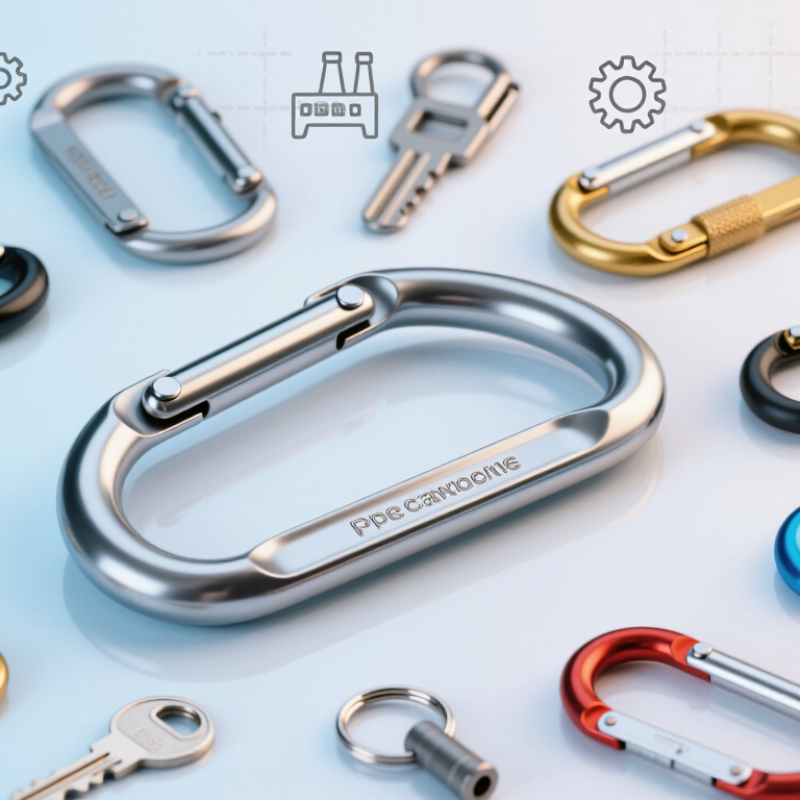
China’s top 10 carabiner keychain suppliers differ mainly by product strength. One focuses on lightweight aluminum bodies for everyday keys. Another specializes in stainless steel, with thicker walls and better corrosion resistance. A third offers compact bottle-opener designs for promotional campaigns. Some suppliers perform well with soft enamel, laser engraving, or raised logos. Others handle colorful anodized finishes and small custom batches. One supplier stands out for quick-release clips. Another provides rotating swivels that reduce twisting inside a pocket. A ninth focuses on gift packaging, while the tenth supports large, stable production runs.
A reliable sourcing review should examine more than catalog photos. I usually request material samples, coating reports, dimensional drawings, and pull-test records. The gate should close smoothly. The spring should not feel loose after repeated use. Sharp edges need attention, especially around the ring and clip. Carabiner keychains are useful accessories, but they should not be marketed as climbing equipment unless separately certified for that purpose. Sample approval matters.
No supplier wins every category. A polished sample can hide uneven plating in a larger shipment. Low prices may also reflect thinner metal or weaker springs. I would compare five to ten samples under the same checklist. Check weight, clasp recovery, engraving depth, color consistency, and packaging damage. Some factories communicate quickly but document poorly. Others move slowly yet provide clearer quality records. That difference can affect the final result more than a small unit-price saving.
What Manufacturing and Customization Options Do Suppliers Offer?
China’s leading carabiner keychain suppliers offer more than standard metal accessories. Many produce aluminum alloy, zinc alloy, stainless steel, and lightweight steel models. Each material changes the product’s weight, surface feel, durability, and cost.
Manufacturing methods usually include die casting, CNC machining, stamping, wire forming, and polishing. Aluminum models often receive anodizing or powder coating in custom colors. Zinc alloy parts can support deeper shapes and larger logos. Suppliers also provide laser engraving, screen printing, epoxy filling, and raised or recessed branding. Samples should be checked before mass production. A digital proof can look accurate, yet the finished engraving may appear too shallow.
Customization may cover gate shape, spring strength, ring size, packaging, and attachment style. Some factories offer individual polybags, paper cards, gift boxes, or recyclable packaging. Buyers should request material specifications, coating thickness, color references, and inspection records. Load testing matters, but a keychain carabiner should not be treated as climbing equipment. That distinction needs clear packaging language.
Reliable suppliers usually support prototype development, pre-production samples, and batch inspections. Ask how they control scratches, uneven plating, loose gates, and color variation. Small defects become expensive after thousands of units. Minimum order quantities also differ widely, especially for custom molds. A lower quote may exclude tooling, packaging, or repeated sample revisions. I have found that clear drawings prevent more problems than rushed negotiations. Still, no supplier is perfect. Independent inspection remains useful for larger orders.
How to Select the Right Supplier for Your Business Needs
China Top 10 Carabiner Keychain Suppliers?
Choosing among China’s top ten carabiner keychain suppliers requires more than comparing catalog prices. Define your product use, target market, finish, quantity, and packaging before requesting quotations. A supplier experienced with zinc alloy may not handle aluminum consistently. Ask for material specifications, plating standards, dimensional drawings, and recent production photos. Request samples from the same production line, not only showroom pieces.
Test each sample several times. Check gate movement, spring recovery, sharp edges, coating adhesion, and logo accuracy. Carabiner keychains are usually accessories, not certified climbing equipment. Your packaging and product description should make that distinction clear. Ask suppliers for quality-control records, pre-shipment inspection options, and relevant material or chemical test reports. Verify documents independently when possible. Polished paperwork is not proof of stable manufacturing.
Commercial details also shape the right choice. Compare minimum order quantities, mold fees, sample charges, lead times, carton dimensions, payment terms, and response speed. A low unit price can become expensive after rework or delayed delivery. Contact two or three shortlisted factories with the same specification sheet. Their questions often reveal practical expertise. Ask who owns the mold and how changes are approved. Keep written records.
I would not select a supplier from ranking alone. A strong website can hide weak process control. My own shortlist would favor traceable production and honest limitations over impressive promises. Test the supplier’s communication under pressure. Ask for a corrective-action plan when a sample fails. That conversation can be more useful than another discount.
China Top 10 Carabiner Keychain Suppliers? How to Select the Right Supplier for Your Business Needs
Recommended procurement weighting for comparing suppliers without relying on company or brand names.
Product quality and compliance should receive the highest priority because carabiner keychains are metal hardware products exposed to repeated handling, coatings, and environmental conditions. Cost, production capacity, customization, lead time, and communication can then be used to distinguish qualified suppliers. The percentages represent a practical buyer-side evaluation framework and should be adjusted to match your product requirements, order volume, and target market.